Showing posts with label Unmade Monsters. Show all posts

Monday, August 22, 2022

Voyage to the Bottom of the Promotional Paintings!

Nothing major for today but I wanted to share the promotional artwork (possibly concept art) done for the television version of VOYAGE TO THE BOTTOM OF THE SEA (1964-1968), featuring four giant sea monsters that never made it into the series proper.

Like my previous post on Tabby-Imago, I'm using self-created nicknames for the following creatures to simplify the descriptions and because I just want to (if every other Godzilla and Power Ranger fan gets to name the unnamed, why not me?).

The first creature, which I'm nicknaming The Clawed Chimera, appears to be a combination of several sea animals, but the prominent claws give the initial impression that it's a simple giant crab before noticing the rest of the aforementioned bodily features. To my knowledge, there are at least two crustacean-based monsters in Voyage to the Bottom of the Sea: a giant aquatic spider-like creature in "The Monster's Web" (February 27, 1966), and the titular human-sized antagonist of "The Lobster Man" (January 21, 1968).

Confusingly, the main villain behind "The Deadly Dolls" (October 1, 1967) is mockingly dubbed 'The Hermit Crab' by the show's heroes, even though the being itself is a highly advanced, energy-like machine intelligence from the distant future seeking to possess The Seaview (the show's iconic submarine) for its new physical form.

As for the second monster featured: I've always had a preference for plesiosaur-like kaiju and characters, so you know which one I like between these two otherwise nifty critters. However, the lack of two-out-of-four pictorial fins gives me hesitation about nicknaming him The Abyssal Plesiosaur, with the vague alternative of Abyssal Sea Serpent matching the odd design better.

Beyond that, the art itself is very good, especially the luminous backlighting, but I will admit the serpent's eerily calm face might turn off most monster and horror fans.

My least favorite monster in these paintings, Pink-Tooth the Sea Beast (if you can think of something better, please share), is probably my least favorite of the four, but the mudskipper-like shape and long grasping arm-like front fins positively reminds me of the Ichthyosaurus Mercurius from The Outer Limits episode "Tourist Trap" (December 23, 1963).

Last but not least is The Black Devil Dragon, who is probably the coolest-looking monster of the promotional paintings and the one that I would loved to have seen in a completed episode, possibly as some ancient and terrifying menace that The Seaview accidently awakens from an undersea volcano. Or an aboveground volcano, seeing how that's The Flying Sub firing beams at the opposing giant.

I rediscovered these paintings in my personal archives and combined the small files into slightly larger and more presentable collages above. I tried to re-locate the old Voyage to the Bottom of the Sea site I collected (stole) these from but to no avail. If I rediscover said website or stumble upon the real official names of the featured monsters, I'll gladly update this article in the future.

Thursday, July 29, 2021

Kaiju Videos for July 29th 2021

Here's some intriguing kaiju and other giant monster-related videos to for me to share and for you all to enjoy. I will be keeping up this feature as-often-as-possible for the remainder of 2021.

Direct from Matt Draper:

A comprehensive look at The Millennium Era of Toho Godzilla, including a look at the history of Roland Emmerich's Godzilla '98, how Toho returned Godzilla ahead of schedule with Godzilla 2000, and the many reboots and evolutions found within The Millennium Era, covering 6 films made from 1999 through 2004. This is Part 3 of an ongoing Godzilla series.

Direct Link: https://youtu.be/8o-_VPDC4-8


Direct from MONSTROSITIES Tokusatsu Vlog:

A look at GODZILLA SINGULAR POINT's beautiful yet briefly seen version of Mothra.

Direct Link: https://youtu.be/NhyLpqHXBxs


In his latest video essay
"How Toei Changed Sunday Mornings", MercuryFalcon takes an extensive look at The Toei Fushigi Comedy Series: a loosely connected franchise of lighthearted fantasy adventures and mystery comedies that had major influences on the creation of SAILOR MOON and how it all came to an unlikely but satisfyingly end in a kaiju-filled crossover with the one and only ULTRAMAN.

Direct Link: https://youtu.be/PecckVgJvSE


Direct from Supervoid Cinema:

After Sam Riami's 'Spider-Man 4' never happened the character was rebooted with 'The Amazing Spider-Man'. There were ambitious plans for a whole slew of movies set in that universe. Drew Goddard was at one point time attached to write and direct a 'Sinister Six' movie for Sony, as part of 'The Amazing Spider-man' and when that fell apart he would be offered a potential 'The Spectacular Spider-Man' reboot (Which later became Spider-Man: Homecoming). Here's the story of why complete with dinosaurs and giant monsters attacking New York.

Direct Link: https://youtu.be/vS42hyhnMSc


Saturday, March 5, 2016

Snails Unmade: THE SHORT VERSION

Okay...So I REALLY went overboard in my last article dealing with the unproduced 1979 film "Snails".

But I honestly had to, in order to give this obscure project a sort of online history and 'links of origin', to prove that it was real to begin with, despite coming from outdated and broken sources across the internet. But there's some people who just want to get to the point, which is what this reduced revision is all about.

Concept art for the unproduced 1979 film "Snails"
"Snails" was an unrealized 1979 American production (possibly independent) that would have involved a group of people stranded on an island in the Bahamas, being attacked by thirty-foot tall sea snails, brought to cinematic life through stop motion.

A filmed test reel was supposedly created, with animators Phil Tippen (Tippet?) and Tom St. Amand in character roles, however this footage has yet to materialize.

All that currently remains from the planned production is one lone piece of concept art, featuring a giant sea snails being harpooned by the human protagonists, as a lighthouse shines in the night-covered distance.

ENSHOHMA'S TAKE on "Snails" (version 2):

I often imagine what certain unmade film productions (monster or otherwise) would have ended up like, if they were filmed to begin with of course. But there's so little information currently available on "Snails" that the only thing I can do is admire the gorgeous and atmospheric concept art, and hope more details will come to light in the near future.


As for the thought of snails being horrific killers; I'm use to such gastropod-based characters in Japanese monster movies and fantasy television, many of which actually being quite fun and nifty-looking antagonists. But are far from the intimidating types, with the possible exception of the murderous Kraken Sea Snails from the 1957 American feature "The Monster That Challenged the World".

That was until fellow artist and Kaiju fan Bracey100 shared with me a pair of videos (one about the Cone Snail, and another with this unfortunate fish) showing that sea snails at such enlarged sizes could pose a pretty nasty, if not nightmarish threat.


Wednesday, March 2, 2016

In Search for the Giant Sea Snails That Never Were

For the longest time, I had hope to present heavily detailed and researched articles based on lesser known giant monsters, or 'Kaiju' as all the hip kids are all calling them these days.

I honestly can't freaking believe that this once relatively obscure Japanese term has now become recognizable slang in modern American popular culture...Thanks for nothing "Pacific Rim"!

However, I've come to the sad realization that I cannot effectively write such articles without sacrificing precious time spent on more rewarding gigs, like paying art commissions and my own planned published comics. And my resources for doing such research in highly limited, or in the case of certain individuals that I care not to name, highly unreliable.

But like some kind of demented Johnny Appleseed harvesting a field full of deadly Triffids, I can at least plant the seed of awareness for such obscurities, and give these lesser known Kaiju some limelight beyond long defunct web-sites from the distant internet past, or lost within pages-of-pages of forums and related discussion threads.

Hopefully such quick and easily written blurbs, with a (BIG?) dash of op-ed journalism, will inspire other writers to take the baton and create superior articles connected to these obscure monsters in questions. Or not.


Concept art done for the unproduced 1979 film "Snails"

Let's start things off with a dip into the always fascinating (if sometimes problematic) world of monster movies that were planned and announced, but never saw life as finished films or television projects. Even if, again, the available information on these obscurities are limited at best.

As with the case of today's subject, "Snails", a proposed 1979 monster movie that was brought to my attention by 'mdcarter' and his now incredibly old website Unmade Giant Monster Movies.

BEWARE before you click on the highlighted link above, for Unmade Giant Monster Movies is an angelfire-based website, where pop-ups and other technical disturbances are common place. The page has some nice tidbits from the world of unproduced monster movies, but sadly I can no longer reach its aforementioned creator mdcarter, and I plan to re-post as much of that site's content to my blog here, throughout the year of 2016.

Here's the text originally posted (re-warning: its angelfire) in connection to "Snails" from said site:

According to The Illustrated Dinosaur Movie Guide: "Test reel for an unrealized feature about people stranded on an island in the Bahamas attacked by thirty foot tall stop-motion sea snails. With animators Phil Tippen (Phil Tippet?) and Tom St. Amand in character roles."

"The Illustrated Dinosaur Movie Guide" was indeed an actual book, written by Stephen Jones, and with an introduction by the late, great stop-motion animator and fantasy film legend Ray Harryhausen. And was published by Titan Books in 1995, though some sources also note of an earlier publication in 1993. And like an age old gypsy curse placed upon The House of Enshohma, "The Illustrated Dinosaur Movie Guide" is long out-of-print.

Sure, there's probably an e-book option, or some kind of computer download that's unfriendly towards older PC novices like myself. So screw it, moving on...

The concept art posted towards the top of this article is also legit, but was presented online by an individual dubbed 'MovieMatt' (or 'mattman') on various monster movie related forums and message boards. Here's one such example (scroll downwards).
ENSHOHMA'S TAKE on "Snails"; I often imagine what certain unmade film productions (monster or otherwise) would have ended up being like, if they were filmed to begin with of course. But there's so little information currently available on "Snails" that the only thing I can do is admire the gorgeous concept art, and hope more details will come to light in the future.

Again, all I can do is play the role of a demented Johnny Appleseed and hope for a monstrous harvest this season.

Original version, without my blue-tinting (WHY did I do that again?)


Direct Blog Posting of the Images, for Posterity Sake:


Saturday, October 4, 2014

Moguera Was Once A Real Boy!

As mentioned in my previous post on Roboes,  robots and other similar automatons are awesome! So I think I’m going to continue that line of thinking.

Because again, ROBOTS ARE AWESOME!


Despite the success of 1954’s “Gojira”, and its American adaptation “Godzilla, King of the Monsters” in 1956, Toho Studios didn't exactly begin the Godzilla franchise in full, until 1962.
Especially after the sequel “Godzilla Raids Again” (1955), failed to click with audiences, along with its pretty terrible 1959 American version “Gigantis the Fire Monster”.

“Gigantis” is a whole article of woe all on its own. But let’s just say that the renaming of a popular character like Godzilla, in an decade without the internet, or reliable entertainment news sources, did not go over well.

Thankfully for fantasy fans, Toho continued their string of science fiction and monster movies throughout the fifties. They just did it without Godzilla.

Among these were 1957’s “The Mysterians” (alias “Chikyū Bōeigun”, or "Earth Defense Force"); a Japanese take on the attempted alien invasions of Earth narrative. And one that also manages to do some things different, from the older American efforts which inspired it.

It was filmed in glorious color, and had a very decent budget, as it's often forgotten that Japanese monster movies were technically A-level productions. Until the downgrading of the 1970's. And featured plenty of cool super weapons and vehicles on both sides of the  interplanetary conflict.

Much more intriguing than how these alien invasion film’s usual play out, with the aliens having all the fun toys, and the human heroes only whipping up one useful, but otherwise unimpressive trinket to defeat the invaders at the end.
Including computer viruses programmed by David Levinson, and yodeling from vintage country music albums.

And straight from The Mysterians’ toy chest, comes the giant burrowing robot dubbed Moguera.


Moguera (as in Mole), may not be the first robotic Kaiju in Japanese fiction, but he is the first prominent one featured in the Kaiju film genre.
And although he / it has not appeared in more than two films, the original 1957 version of the character remained a mainstay in Kaiju / Godzilla merchandising for years.

Moguera is a giant burrowing robot used by The Mysterians to first help construct their underground headquarters on Earth. And then later, unleashed upon the surface as the first violent example of their otherworldly power. Despite the robot’s destructive presence and laser beam eyes, Moguera is taken out with multiple explosives across Koyama Bridge.

A second Moguera unit is briefly seen during the climax, as it creates ground fissures to swallow up the human’s own gigantic super weapons dubbed Markalites (mobile energy-shooting satellite dishes). Only to be destroyed by its own handy work, as one of the Markalites falls on top of it.

'Moguera 2', about to be crushed by a falling Markalite Cannon

A heavily reimagined Moguera, now called M.O.G.U.E.R.A (an acronym for Mobile Operation Godzilla Universal Expert Robot Aero-Type), appears in “Godzilla vs Space Godzilla” (1994). This human-built military machine is a successor to the previous year’s Mechagodzilla, whose pilot crew fights alongside Godzilla (however reluctantly), against his cosmic doppelganger.

I’m pretty supportive of almost any giant monster out there, but given a choice between the two Moguera automatons, I’ll take the 1957 vintage any old day.

Moguera (the first one) on the warpath!

The original story for “The Mysterians” had no monster in it, as Mogera's inclusion was a last minute idea from producer Tomoyuki Tanaka, whom felt the film needed a Kaiju. Bless him.

The original concept for Moguera was to have him / it be a half-mole, half-reptilian creature. Though the design was never brought to special-effects-suit life, some key details were later used for another burrowing giant, Baragon, from the 1965 film “Frankenstein Conquers the World”.

Director Ishiro Honda reworked Moguera into being a robot, as a way to further demonstrate the technological powers that The Mysterians possessed. Below is a compilation piece I put together, featuring design art and storyboards of the abandoned flesh and blood Moguera.


And plenty of alternate files of the unrealized Moguera, that you readers are welcomed to collect and share elsewhere online.


Thursday, July 3, 2014

G-G-G-G-Ghost Godzilla!!!

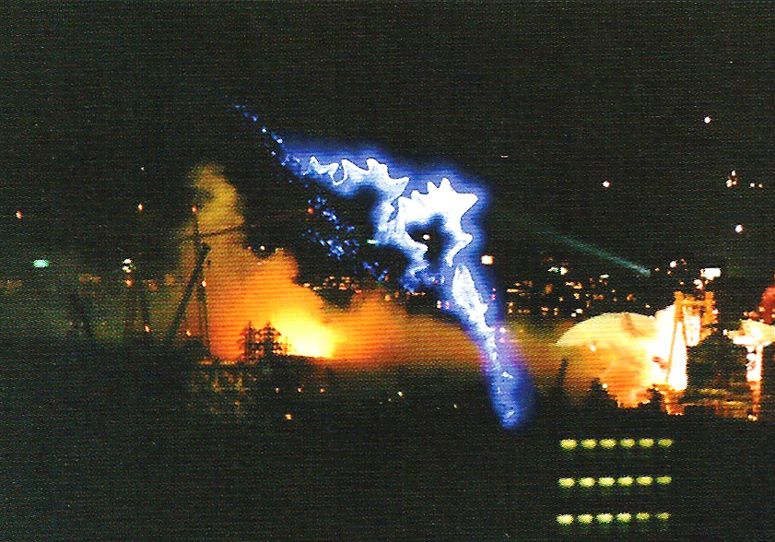
UPDATE: Here's another official piece of concept art, that I totally forgot to upload the first time around. This one features Ghost Godzilla's visible dorsal fins, amongst some city devastation.


I don't have much time for an extensive article, centered around otherwise trivial nonsense. So here's a brief article...also centered around otherwise trivial nonsense!

And surprise, surprise! It's yet another Kaiju (giant monster) related one!

We'll be discussing unproduced, or abandoned monster movies once again, and this time, with one of the more famous examples of such - "Godzilla vs Ghost Godzilla" (1994-1995).

Originally planned as the final film to close out the Heisei-cycle of the franchise (1984-to-1995), "Godzilla vs Ghost Godzilla" had its then-current incarnation of the title Monster King, go up against the supposedly more villainous ghost of his long deceased, 1954 counterpart.

More information on the unmade project can be found at Toho Kingdom.

The concept was dropped, largely due to the previous two entries also featuring 'Evil Godzilla Clones'. Those being 1993's "Godzilla vs Mechagodzilla II", and 1994's "Godzilla vs Space Godzilla"And "Ghost Godzilla" was replaced with the more original (and ultimately filmed) swan song "Godzilla vs Destroyah" (1995).

In recent years, the one piece of conceptional artwork done for Ghost Godzilla himself, has surfaced on several fan forums. But has yet to be properly posted on actual web-sites and blogs.

So 'Why the Hell not?' I figured!

The rough scan that's being presented below, comes from a licensed Japanese Godzilla book. But I currently have no idea to which one, or to said book's title. Enjoy the obscure eye-candy regardless, everybody!


Probably to the disappointment of many fan artists, the 'REAL' Ghost Godzilla is a fairly simple creature design, as it's just the 1954 original, but given a supernatural blue glow and transparency.

Don't get ME wrong though, as it's highly effective for what it is, and most certainly works as a 'Ghost Godzilla'.

But again, this is merely concept art, from the earliest stages of what ultimately became an abandoned production. And no clue how far the filmmakers would have gone with the Ghost Godzilla character, as to wither-or-not he'd transform between multiple other body stages. Much like The Librarian and her secondary 'back-off' form, from the classic comedy "Ghostbusters".

We are talking about the Godzilla films of the 1990's, after all. It's here (with the arguable exception of Godzilla / Burning Godzilla) that almost every creature featured in these movies, had one-or-more different body upgrades.

Like some kind of nightmarish, jumbo-sized precursor, to ludicrous Pokemon Evolution!

Wednesday, June 18, 2014

Concerning The Sea Dragon

So this post is based around the lesser known 1987 Japanese fantasy film "Princess from the Moon" ("Taketori Monogatari").

Produced by both Toho Co. Ltd and Fuji Television, "Princess of the Moon" was a prestige picture, based on the famous Japanese folktale "The Tale of the Bamboo Cutter", also known as "Princess Kaguya".

I'd go into further detail, especially the original story's proto-science fiction elements. But I'm not THAT good of a nonsense scholar, so I don't want to start spewing inaccuracies from the proverbial hinder, if you will. And besides, Wikipedia is NOT as useless as the so-called 'normal masses' will tell you otherwise, so here's their informative article on said folktale.

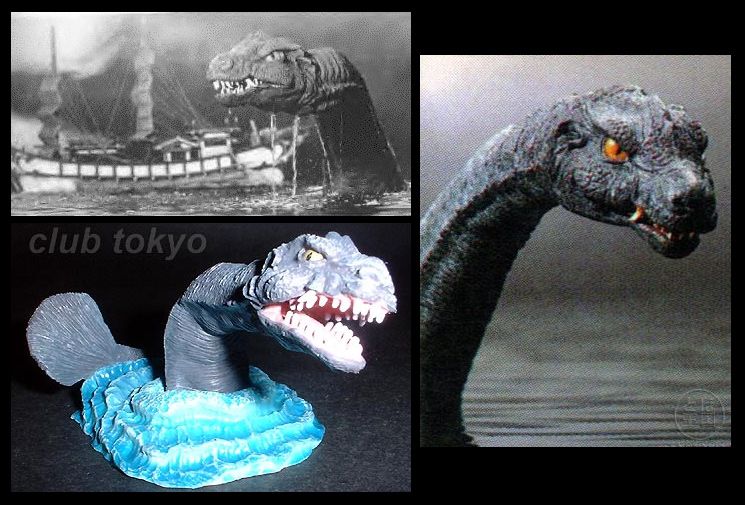
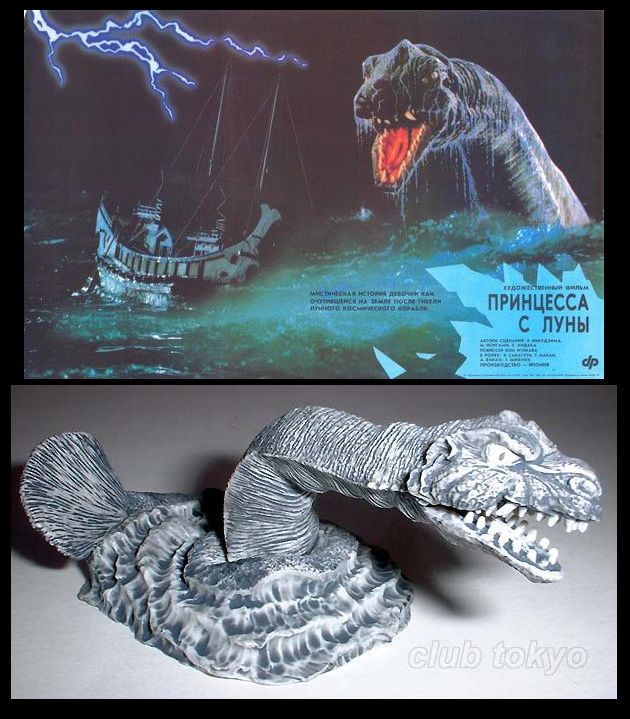
And instead, I'm going to focus on the 1987 adaptation's lone Kaiju named The Sea Dragon (or simply Dragon).

*********

Contrary to popular belief, mythology never remains constant, between all the various retellings and revisions done to them.

What Disney Animation did to the many Grimm Brothers fairy tales, and Ray Harryhausen nixing the sea monster Cetus, for an original character with the unoriginal name of The Kraken, are both examples of this.

Well, "Princess of the Moon" decided to put a giant monster into its own retelling, along with a newer sub-plot to get it there.

Basically, the half-human / half-lunar alien Kaya (Princess Kaguya herself), attracts the attention of several royal, and high ranking suitors. And Kaguya sends all of them on virtually impossible tasks, in order to sway their affections well away from her.

One such task sends the only real love interest of the lot, to sail to the ends of the Earth. And he, along with his crew, have a disastrous oceanic run in with The Sea Dragon, who promptly sinks the 'good' suitor's ship, with all hands on board.

I'd gleefully say 'Great job on that mess, Princess Kaguya!' But seeing how the somewhat aloof alien-human princess does indeed mourn this particular tragedy, by loosing her one decent would-be husband, that would just be mean spirited.

"Princess from the Moon" is one of those obscure Japanese fantasy films that the more mainstream Kaiju fans here in America MIGHT have heard of in passing (more on that later), but never really followed up on it.

Now there is a rather unfortunate bias these fans have towards all other forms of Japanese science fiction and fantasy. Mainly because Godzilla himself ins't in any of these non-Godzilla projects. And as such, they will openly dismiss and ignore even the exciting entries into the genre. Like last year's "Pacific Rim", and the better series within the Ultraman franchise.

But equally as problematic, is that most of these overlooked Tokusatsu productions are...well...just not that good, when finally seen. Or all that interesting, even by their own individual merits.

Now don't get me wrong, for "Princess of the Moon" is NOT at all a bad film!

It is a very well done, straight faced production, filled with a strong cast of equally prestige Japanese actors. Including world famous veteran Toshiro Mifune, as Taketori-no-Miyatsuko; the woodcutter-turned-wealthy adoptive father of Kaguya.

But like most big studio prestige films (prestige is a fun word to use), it's mostly pomp with very little circumstance. And as such, kind of monotonous to get through, viewing wise.

The film was directed by the acclaimed director Kon Ichikawa, whose work has often been noted by having 'a certain darkness and bleakness, punctuated with sparks of humanity'. However, "Princess of the Moon" is the only film of his I've seen, so I can't tell you for sure if his signature style also includes the aforementioned monotony.

Though with all that said, I'd really like to see his feature length documentary "Tokyo Olympiad" (1965) sometime soon.

Which finally brings us to freaking The Sea Dragon himself; he's barely in the blasted movie!

And no, I'm not being a bitter Kaiju fan here, but the monster's presence is so short, and virtually as pointless, that I honestly believe the movie would have benefited by NOT including the creature to begin with. And instead have Princess Kaguya's true love, be taken out by a regular sea storm. Just like the contractually obligated dead parents from Disney's "Frozen" (2013).

And what little screen time The Sea Dragon does have, we never really get a good look at the monster. Mainly the stiff puppet's back, being pulled through the water, of a smoke-covered model set.

With said, the only good images of The Sea Dragon have been from the few toys and promotional photos made. And so minor are these, that I was forced to make the following composite images through online theft (original web sources are self explanatory).


So how come A LOT of American Kaiju fans seem to be more aware of the minor creature, over the bigger film it originates from?

For a long while now (and still happening, apparently), a lot of people assumed that The Sea Dragon was a recovered, or refurbished monster prop from the failed Toho and Hammer Films co-production "Nessie" (1976-1979).

This of course have long since been disproved, as The Sea Dragon and The Loch Ness Monster from that unproduced effort, are two completely different, unrelated monsters. Both fictionally and actually.

But it's always worth mentioning, and to clarify the situation further, here's some really informative articles on the uncompleted making of "Nessie".

Cryptomundo's Article, by Mark Jaramillo.
A secondary article by Mark Jaramillo.

Saturday, February 11, 2012

Ice Giant and Ice Men Sketches

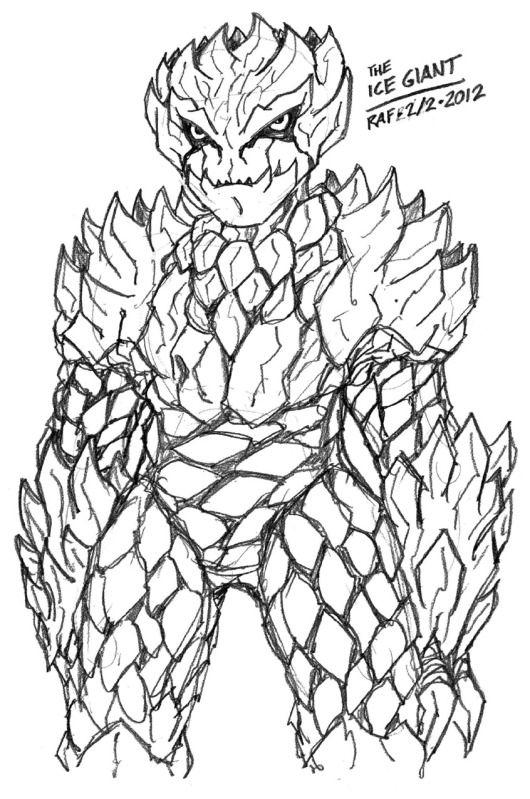
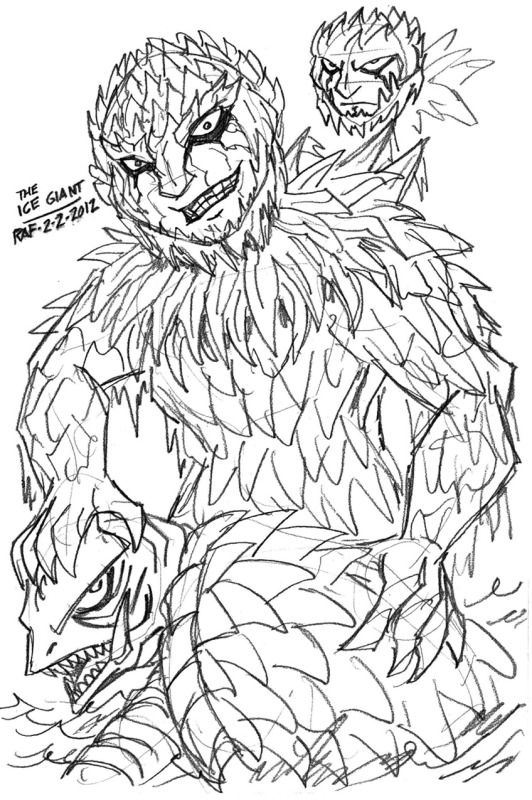
Following up from my last post regarding the unmade movie "Gamera vs. The Ice Men from Outer Space", this was my first attempt at The Ice Giant, and again, based it on some educated (if not realistic) guess work.
My First Attempt At The Ice Giant.
The Ice Giant creature is deliberately humanoid, so I could easily ignore the wild design choices of Gamera's other Showa-era foes, with a more straightforward build. I also took cues from both Daimajin and Daiei's Yokai Monster films, in regard to minor effects make-up that would allow for the suit actor's eyes to be visible.

This choice made the Ice Giant quite monstrous, while keeping it to something that could still be easily constructed by 1966 movie monster terms. And in addition, invoked the style of traditional Japanese fantasy and monster art, despite the character being inspired by the Frost Giants of Norse mythology.

I really like this first design, but based on that last fact alone, I decided to do another take on the Ice Giant that would be more in tune with the Frost Giants...
My Second Try At The Ice Giant.
Egad, was that a bad idea!

Now this design is supposed to be full-blown actor make-up, like the title monsters from "War of the Gargantuas" (1966), but with the actor's face far more visible than the aforementioned movie beasts.

It's very true to the mythological Frost Giants, but at the same time, pretty lame for a Japanese movie monster. Or at least a Japanese movie monster from the sixties, as opposed to the strange, simplistic make-up effects from earlier films of the fifties and thirties. Like the pre-Godzilla era film "King Kong Appears In Edo" (1938), where in those two decades at least, this sort of design would have made much more sense.

In theory this should have worked, but again, its very weak compared to the design that came before it. Plus, why is he trying to drown a sea fairing turtle like Gamera? I know I drew this blasted thing in a creative haze, but seriously, what the heck ME?

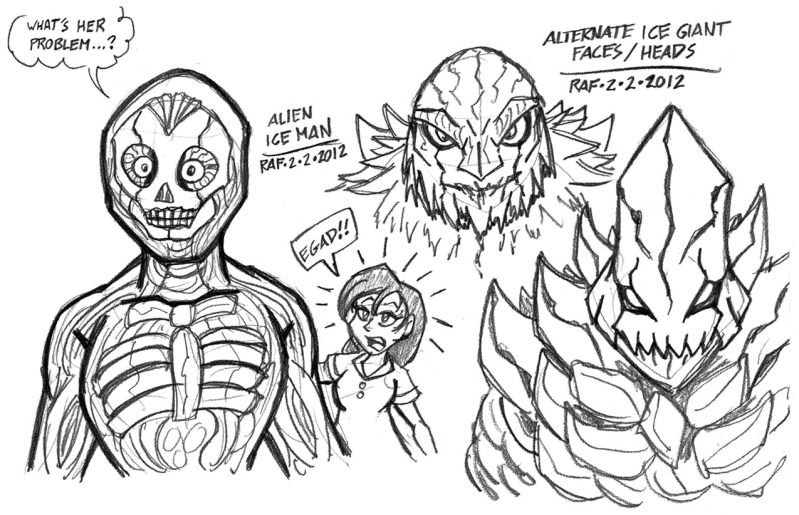
Ice Man and Miscellaneous Designs.
 
I decided to try my hand at the second design once more, believing that the main fault lied with the head and face. The second attempt at a slightly less human-like Ice Giant is good, but also not all that great.

There's also an alternate take for the first Ice Giant design's head, and although it's cool looking (pun not intended), it comes off too much like Guiron's knife shaped cranium. Not to mention being way too elaborate for a 1966 Japanese fantasy film.
Also seen above is my take on the alien Ice Men themselves; again, it may be too elaborate for the sixties, but it follows the original concept quite closely, and it does look way too good for me to dismiss easily.

I'm guessing the Ice Men could only have been executed around this time through puppets, and tried to incorporate such a lifeless weirdness to their already grotesque forms.

I couldn't help myself from throwing in some humor to the sketch, since the Ice Man seen here really is a nasty looking piece of work, who would probably be more at home in one of Gojin Ishihara's wonderfully twisted illustrations, than a Daiei science fiction epic.

*******

Realistically however, Daiei may have come to the conclusion that the Ice Men, as they were originally imagined, would be too extreme, both in their construction and operation on set. Or at least, far more extreme for audiences tastes at the time (the Japanese kids would have loved it though).

So the Ice Men may have ended up more human looking in the final film, had it ever been completed, minus some icy white skin and related uniforms, done with minimum effort. This purely hypothetical idea of mine and mine alone, is very similar to the alien races featured in other Kaiju Eiga around that same time, namely the Xillians of "Invasion of the Astro-Monsters" (1965).

Thursday, February 9, 2012

Gamera vs. The Ice Men (1966, Unmade)


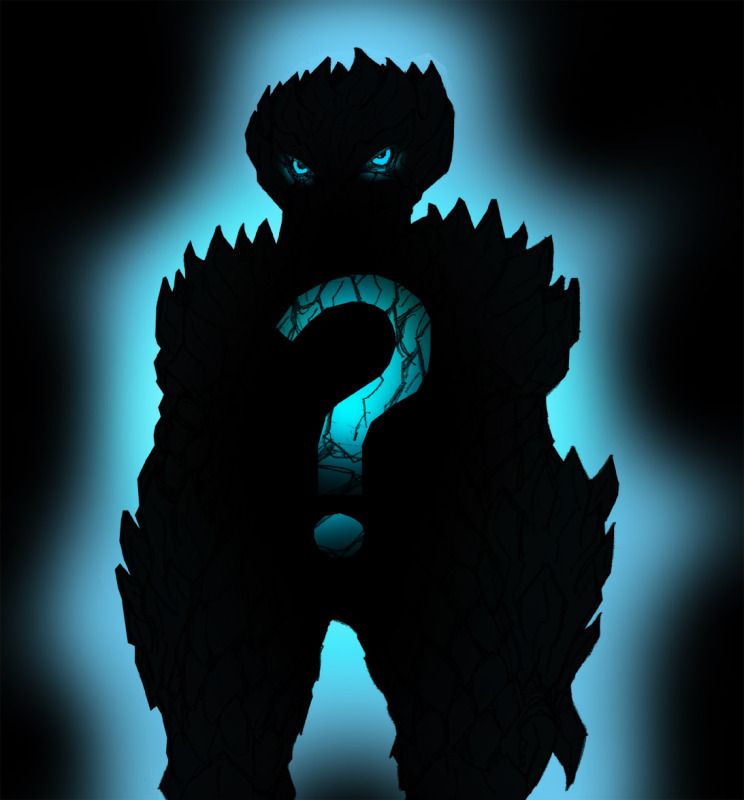
Teaser Art for What Will Be My Version of The Ice Giant

I finally got myself a copy of Shout Factory's release for "Gamera vs. Barugon" (1966), and immediately headed straight for the audio commentary by tokusatsu (Japanese for live action effects fantasy films) expert August Ragone.

No offense to the film itself, but I've seen it plenty of times before, either by itself, or with the "Mystery Science Theater 3000" crew. And that being said, I was more interested in the obscure history of the Gamera franchise, which admittedly, no one touches upon beyond August Ragone's commentaries. And maybe, MAYBE, the odd magazine article that I don't have the time (nor money) to effectively track down.

And it's a real shame that the remaining Gamera DVDs from Shout Factory lack August's input, because I love hearing about giant monster movies that never were. And boy, did I get a welcome surprise gift with the "Barugon" commentary!

*******

Now before I go any further, for those who don't know who Gamera is, let me enlighten you.

The 1960s was the golden age boom for Japanese movie monsters, with Toho Studio's Godzilla series and its various spin-offs, dominating the box office in both Japan, and globally abroad. Because of this, other Japanese film companies, who were somewhat reluctant to follow in Toho's knack for tokusatsu film making, eventually jumped on the band wagon, and with varying results.

The most successful of the these was "Giant Monster Gamera" (1965), a black-and-white B-movie from Daiei Motion Picture Company, which dealt with giant prehistoric turtle from the arctic, accidentally reawaken in modern times by atomic weapons. If that wasn't strange enough however, the giant turtle also lived off flames, had the crazy ability to become a flaming flying saucer-like form while tucked within his shell, and went on a destructive rampage across Japan to satisfy his millennium long hunger.

You know, just like us humans after a prolonged, jet lag induced nap!

In the end, Japanese and other foreign scientists work together to build the Z Plan Project; basically a gigantic rocket ship (far larger than even Gamera himself is), to trap the monster. And to safely send the deadly turtle to live on the planet Mars, since Gamera is too dangerous and virtually invincible to leave here on Earth.

"Giant Monster Gamera" turned out to be a surprised hit, and Daiei followed suit with more movies staring their previously doubted terrapin newcomer, along with other sci-fi and monster based movies that were to rival Toho at the box office. Since then, the Gamera series has been an off-and-on-again affair, especially when compared to Godzilla's more stable career. But to date, there has twelve entries into the series, ranging from sub-par children fair, to fantastic accomplishments that even novices to the genre can easily enjoy.

And like Godzilla and many other giant monster movies throughout cinematic history, Gamera has had his fair share of projects that never made it to final celluloid, which brings us to today's topic at hand...

*******

"Gamera The Giant Monster Versus The Ice Men From Outer Space" (or "Gamera vs. The Ice Men" for short) was the original concept for the 1965 film's sequel. And was a surprisingly ambitious story idea, even by the standards of other unproduced Kaiju Eiga (Japanese for monster movie) ideas.

The original story treatment deals with alien invaders dubbed The Ice Men, whose transparent, ice-based bodies grotesquely exposed their internal organs and skeletons. They begin their invasion of Earth by setting off multiple volcanic eruptions across the globe, in hopes that the ash-soaked atmosphere will create a new ice age. And thus drive an unwitting humanity underground, so that they can have free range, and control over the surface.

Humanity insists on remaining above ground however, and thus the Ice Men are forced to reveal themselves, in order to forcefully enslave the human race instead.

When life gives you lemons, make lemonade.

Meanwhile, Gamera is set free from the Z Plan capsule (not unlike the events from the completed '66 sequel), and flies back to Earth. And by fortunate timing and circumstance, joins mankind in its final, epic battle against the Ice Men, who also unleashes their own monstrous champion, the simply titled Ice Giant.

*******

Unlike other monsters from the Gamera series, who were wildly original creations of a considerably inhuman, animalistic design, The Ice Giant was going to be a very humanoid entity, heavily inspired by the fearsome Jottun (or Frost Giants) of Norse mythology. Particularly the Ymir, who was said to be the most massive and ancient Frost Giant of them all. And of whom the semi-tragic Venusian monster of the 1957 film "20 Million Miles To Earth" takes its name from.

"Gamera vs. The Ice Men" never got pass a basic story treatment, but the concept of a contradicting cold element, against Gamera's fiery one, remained, resulting in the finished version's title antagonist of "Gamera vs. Barugon" (1966).

However, the idea of a humanoid being made from an geological element, stuck with the Daiei production staff, who soon after replaced the element of ice for that of stone. And taking cues from the Jewish folklore creature known as the Golem, and a little bit of Japan's own supernatural legends, resulted in the creation of stone idol Daimajin, and his impressive trilogy of films, all from 1966 alone.

I'm surprised that no one else brought up this awesome tidbit of unproduced movie trivia. And being an artist, I plan on doing my own interpretations of The Ice Giant and his masters, not unlike the educated guess work I've done with this particular Godzilla obscurity, Takegami.

Although knowing my luck, never-before-seen production sketches for the icy villains will suddenly pop up from movie oblivion, and half way into my project; not unlike what happened to me and my Ghost Godzilla designs a year ago. But ultimately, real design art from the original film makers themselves would be better than non at all, let alone my own 'fan fiction' style attempts.